 Debout RDC La plume pour un Congo debout



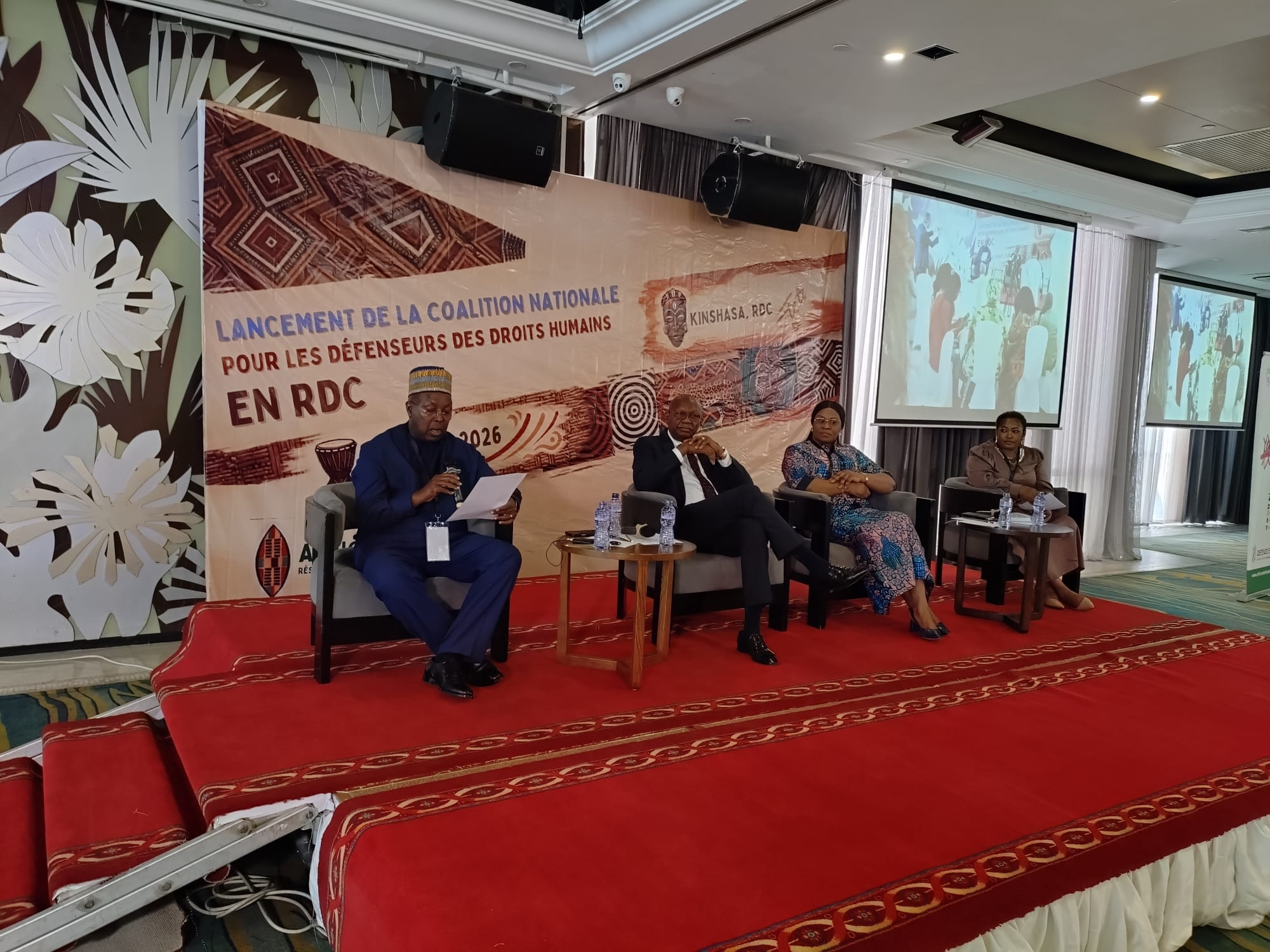
The Democratic Republic of Congo has established a new coordination tool for the protection of civic actors. The National Coalition of Human Rights Defenders (HRDs) was officially launched this Thursday, April 30, 2026, at the Fleuve Congo Hotel, during a ceremony bringing together diplomats, civil society organizations, journalists, and international partners, including the Pan-African Human Rights Defenders Network.
Supported notably by DefendDefenders and AfricanDefenders, this initiative aims to structure a sector that remains fragmented. It intends to strengthen coordination, improve early warning systems, and pool resources to transform isolated initiatives into a genuine collective force. Increased advocacy with the United Nations and African institutions is also among its priorities.
An Initiative Driven by Field Urgency
The launch of this coalition comes despite legal progress made in 2023 with the adoption of a specific law on the protection of defenders. On the ground, the situation remains concerning.
According to Koulibali Fanan, representative of the United Nations Joint Human Rights Office (UNJHRO), 157 cases of violations were documented in 2025, compared to 29 new cases between January and March 2026. Intimidation, arbitrary arrests, and violence continue to target civil society actors.
Lors de la cérémonie d'ouverture, les intervenants ont soutenu la mise en place d'une coalition nationale des défenseurs des droits humains en #RDC, saluant les perspective de renforcement de la protection des #DDH.
— DefendDefenders (@DefendDefenders) April 30, 2026
During the opening ceremony, speakers welcomed the… pic.twitter.com/M0VSYVBXeb
Figures regarding killings also illustrate the gravity of the context: 44 defenders killed since 2006, including 21 since 2023. This worrying trend underscores the urgency of a structured response. In areas such as Goma, Bukavu, and Ituri, marked by persistent armed conflict, the commitment to human rights is exercised in a climate of acute insecurity.
A Framework to Coordinate, Protect, and Alert
The coalition serves as a national coordination platform. It aims to pool resources, strengthen rapid alert mechanisms, and improve the protection of defenders. Participants have adopted a common governance strategy to structure action on a national scale, with focal points in the provinces. Emphasis is also placed on advocacy with international bodies, particularly the United Nations.
A Collective Response Still Expected on the Ground
For Jonathan Magoma, Executive Director of the Partnership for Integrated Protection (PPI), the coalition must act as a catalyst by strengthening existing initiatives without replacing them. He insists on the need to address the lack of attention suffered by human rights defenders and views this structure as a response to current challenges.
For Hassan Shire, Executive Director of DefendDefenders and Chairperson of AfricanDefenders, solidarity remains an essential lever. « Without cooperation between actors, no sustainable protection can be ensured, » he emphasized.
The « Heroes at the Ultimate Price » Report at the Heart of Discussions
The ceremony featured the presentation of the report « Heroes at the Ultimate Price, » an in-depth study on the situation of defenders in the DRC. The document highlights a fragmented, underfunded protection system concentrated in urban centers, leaving rural areas largely vulnerable.
Focusing particularly on the East of the country, the report notes that this region is among the most dangerous environments for defenders in Africa. It points to persistent armed conflicts, the « state of siege » in place since 2021, and pressure exerted by various actors.
Updated in 2026, the report also highlights the degradation of the security context, particularly in areas under the occupation of armed groups, which reinforces the vulnerability of civil society actors.
Between Promises and Expectations
International partners, including the Embassy of the Netherlands, as well as the National Human Rights Commission, expressed their support for this initiative. However, expectations remains high, particularly regarding security, justice, and the fight against impunity. The UNJHRO already recommends a revision of the existing legal framework to strengthen defender protection.
A Coalition Presented as a Strategic Necessity
In light of these findings, the creation of this coalition appears as a structural response. The report presented characterizes it as a strategic, and even existential, necessity to ensure the survival and effectiveness of human rights defenders. The structure must specifically help bridge the gap between urban and rural environments, standardize response mechanisms, centralize information, and strengthen collective advocacy.
Between Remembrance and Commitment
The gathering also served as a venue to pay tribute to human rights defenders killed in the line of duty. This moment of commemoration served as a reminder of the human cost of this commitment. Organizers structured the event around four main pillars: launching a strong coalition, documenting violations, honoring the deceased, and strengthening solidarity among defenders.
Implementation Awaited
While the launch of this coalition constitutes an institutional step forward, its success will depend on its effective implementation. Involved actors are banking on reinforced coordination to concretely improve the safety of defenders.
In a context marked by a shrinking civic space, this coalition appears as a key instrument for structuring the response to human rights violations in the DRC. The coalition launched in Kinshasa is the 23rd across the African continent.
« To date, 22 national coalitions have already been established across the African continent. The one launched today constitutes the 23rd national coalition. It is an association bringing together Congolese human rights defenders, » Hassan concluded.
By Pacifique Mulemangabo