 Debout RDC La plume pour un Congo debout



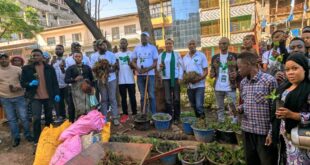
Around thirty stakeholders involved in the recovery and recycling of biodegradable and non-biodegradable waste actively participated in a capacity-building workshop dedicated to sustainable solid waste management through the circular economy approach. Among the participants were 14 women. Organized by GIZ and facilitated by the Laboratory of Hydrobiology, Aquaculture and Natural Resources Management (LHAGREN), the workshop took place from 21 to 27 October 2026 at Hotel Bulungu in Bukavu, South Kivu, in the Democratic Republic of the Congo.
Waste Everywhere
Professor Akonkwa Balagizi, Director of LHAGREN, who chaired the training sessions, explained that solid plastic and biodegradable waste generated by activities in Bukavu’s urban areas often ends up in drainage channels. Through surface runoff, a large proportion of this waste eventually reaches Lake Kivu and the Ruzizi River.
“These wastes affect water quality and disrupt the normal functioning of the Ruzizi 1 and 2 hydroelectric power plants,” explained the Director of LHAGREN.
He added that waste recovery and recycling stakeholders are among those who can help address the problem, since the government alone cannot solve it.
“This is why organisations involved in the different stages of the solid waste management chain need to be trained.”
Waste Causes Serious Harm
According to Professor Akonkwa Balagizi, Director of LHAGREN, this waste management training aims to equip private-sector stakeholders with the skills they need to help protect Lake Kivu and the Ruzizi River while generating income from their activities.
“This training aims ultimately to contribute to the protection of Lake Kivu and the Ruzizi River, which are the main recipients of waste coming from the city of Bukavu,” Balagizi explained.
Solid waste management is a major environmental challenge in Bukavu. Waste sorting, collection, treatment and recovery represent both a challenge and an opportunity for local entrepreneurs.
Waste: A Neglected Goldmine
The circular economy approach encourages people to stop viewing waste as a product with only one life cycle that eventually ends up being discarded. Instead, waste should be seen as a resource that can be recovered and given positive value. It can be reused, recycled or transformed into new products before being returned to the earth, emphasised Bintundu, one of the trainers. This approach can help reduce pollution, preserve natural resources and create local economic opportunities.
“I greatly appreciated the commitment shown by the workshop participants. They asked questions and made suggestions to the trainers. We believe this training will greatly help them improve their activities in the field,” said Professor Akonkwa Balagizi, Director of LHAGREN.
Participants received training on source separation, pre-collection, collection, transportation, treatment (the actual waste management process), and finally, the safe disposal of waste or its transformation into useful resources.
Making a Living Through Business
In addition to the organisers, the training team confirmed that participants had been equipped with knowledge and skills through various modules to help them manage their businesses more effectively. Engineer Alex Ifundo, one of the trainers, shared his assessment:
“We believe the participants appreciated the knowledge we delivered. The training also addressed the learners’ needs, as several topics were covered and discussed, including sustainable management and recovery of urban solid waste, the circular economy, environmental and social safeguards, business planning, digital markets, leadership, business creation, entrepreneurship and management.”
The principles of circular economy-based waste management are first and foremost concerned with environmental protection, particularly the protection of Lake Kivu and the Ruzizi River. Proper waste management should help drive economic development and create further opportunities.
“Waste should no longer be managed in ways that allow it to return to the environment. This is where the circular economy approach becomes important to us. When waste is managed according to circular economy principles, we can ensure that it is used and reused to create other products with economic value,” added the facilitator, Professor Akonkwa Balagizi.
A Useful Training Workshop
For the participants, the workshop provided an opportunity to acquire new knowledge, share experiences and identify ways to improve their businesses.
The discussions and field visits helped them better understand the importance of integrated waste management, from collection to the transformation of waste into reusable or marketable products.
According to Aline Nyamulemi Burume, head of the organisation Actions Globales pour le Développement Durable (AGDD), the training was very useful to her and will also benefit her team.
“This training had a great impact on me. I really enjoyed it because I learned how to develop a waste management business plan based on the circular economy approach and how to find buyers and different customers for our products online. It was very good. I suggest that, on the next occasion, the training should include more practical sessions than theoretical ones.”
Her organisation manufactures paving blocks from plastic waste. However, she acknowledged that it faces challenges related to a lack of equipment and funding, as well as the absence of reliable and regular markets for its products.
Training That Expands Networks
The training, which met the participants’ expectations, generated several positive reactions. Joëlla Buhendwa, an agricultural engineer and president of ASTIFERME, produces maggots from black soldier flies to feed pigs, fish and poultry. These flies also break down organic waste to produce compost and high-quality fertiliser for vegetable growers.
“This was a beneficial training because we learned a lot about waste management. We understood that waste is not simply waste; it also has added value. All we need is to know how to recover and use it. Thanks to this training, we were also able to connect with several waste recovery stakeholders,” said Joëlla.
She recommends that the organisers provide technical, material and financial support to strengthen their initiatives in the field, which remain limited, and help consolidate local waste recovery activities.
“The development of this sector requires technical skills, appropriate support, material resources and collaboration among the various stakeholders involved,” added Joëlla.
Moïse Cibalonza, representing Congolese Discovery, a company involved in converting plastic waste into fuel, said he was motivated to acquire new skills that he could put into practice.
“I appreciated the quality of the presentations, the exchange of experiences and the practical explanations on solid waste management and recovery in Bukavu. I strengthened my knowledge of the role of the circular economy in environmental protection and the creation of economic opportunities.”
Field Visits: Connecting Theory with Practice
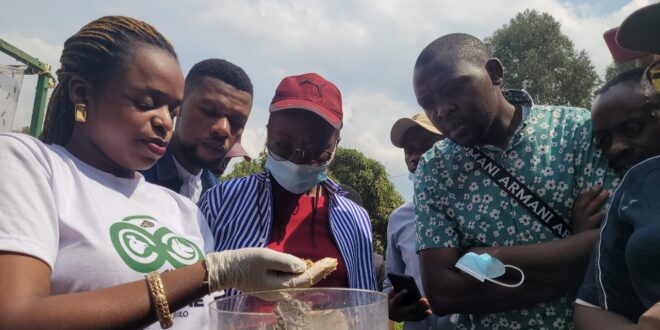
Following the classroom sessions, participants went into the field to gain first-hand experience of the realities of waste management.
The final day was dedicated to visits to business sites in Bukavu and in Kashusha, located 26 km north of the city.
The first visit was to the plastic waste recycling site operated by Actions Globales pour le Développement Durable (AGDD), located within the premises of the Protestant Chaplaincy of the Higher Pedagogical Institute (ISP/Bukavu). At the same site, other entrepreneurs also showcased their expertise in waste recovery. ASTIFERME demonstrated its production process for maggots and compost through the breeding of black soldier flies, which break down biodegradable waste. CONGOLESE DISCOVERY, which also took part in the visit, demonstrated the process of producing fuel from plastic waste.
The second site visited belonged to the organisation Vivre dans la Dignité en Afrique (VDA-RDC), which works in partnership with the manufacturing company Rain Bow of Kongo (RBK) to transform plastic waste into granules.
This organisation is a major player in plastic waste recovery, as it processes and recovers a significant quantity of plastic waste generated in the city of Bukavu. Its site is located within the premises of the National Railway Company of Congo (SNCC).
At this site, PLASTYCOR also showcased bins and chairs made from plastic bottles, as well as briefcases, purses, table mats made from plastic bags, and other decorative craft products.
The training workshop concluded in Kashusha, where participants visited the activities of Food Initiative, a company that recovers biodegradable waste to produce edible mushrooms and compost for vegetable farming.
What Comes After the Training?
According to the Director of LHAGREN, the next steps will involve closely monitoring these partners and organisations in their activities, continuing to support and guide them towards good environmental protection practices in their working methods and job creation activities within the waste management sector. It will also be important to ensure that they put into practice what they have learned.
“As for what comes next, we know that our partner GIZ will continue working with us and will indicate the next steps in line with its plans,” said Akonkwa Balagizi, Director of LHAGREN.
Expected Results
At the end of the workshop, the main challenge remains turning the knowledge acquired into concrete action on the ground. Applying the techniques learned, strengthening cooperation among businesses and raising public awareness are important ways to improve solid waste management sustainably in Bukavu.
“We will know that they have put what they learned into practice when, for example, we see green jobs being created in the waste management sector in Bukavu and fewer plastics floating on the surface of Lake Kivu and reaching the Ruzizi 1 hydropower plant. At that point, we will be able to say that the participants have applied the knowledge acquired during the five days of training,” stated the Director of LHAGREN.
The circular economy therefore offers opportunities to reconcile environmental protection with economic development. According to Aline from AGDD:
“Within my organisation, we face several challenges. This is why the sustainability of these initiatives will also depend on access to appropriate equipment, substantial local subsidies, the availability of commercial outlets for recovered products, and the continued commitment of public, private and community stakeholders.”
By investing in training, innovation and the sharing of experiences, local entrepreneurs can help turn waste into a resource for local development and contribute to building a cleaner, more responsible and more resilient city of Bukavu in the face of environmental challenges, emphasised trainer Alex Ifundo.
Moïse appreciated all the discussions held during the different training modules. In his view, the content was well selected and appropriately tailored. He recommends that LHAGREN and GIZ strengthen technical support and seek financial resources to assist local organisations and businesses, support waste recovery initiatives and promote the implementation of concrete and sustainable circular economy projects.
Joëlla recommends that the organisers allocate significantly more time to practical sessions than to theoretical ones.
“Key partners should be regularly involved at all levels, particularly in advocacy and in providing material and financial support,” concluded Joëlla.